
One last walk with Merle
A family gathering to scatter her ashes includes a slightly delayed celebration of a strong and kind and brilliant woman.

Before she died later that year, Merle asked that her ashes be scattered “someplace beautiful where nobody will mind.”
That was 16 years ago.
On Monday, we scattered her ashes someplace beautiful. Nobody will mind.
And we don’t think Merle would have minded the delay, especially given the time frame in which her spirit now resides.
Merle’s three grown children — Carol, John and Jim — gathered with their spouses at Jim and Karen’s home on the outskirts of Louisville. Jim had selected a clearing by an oak tree on their property, high on a hill in the woods behind the house.
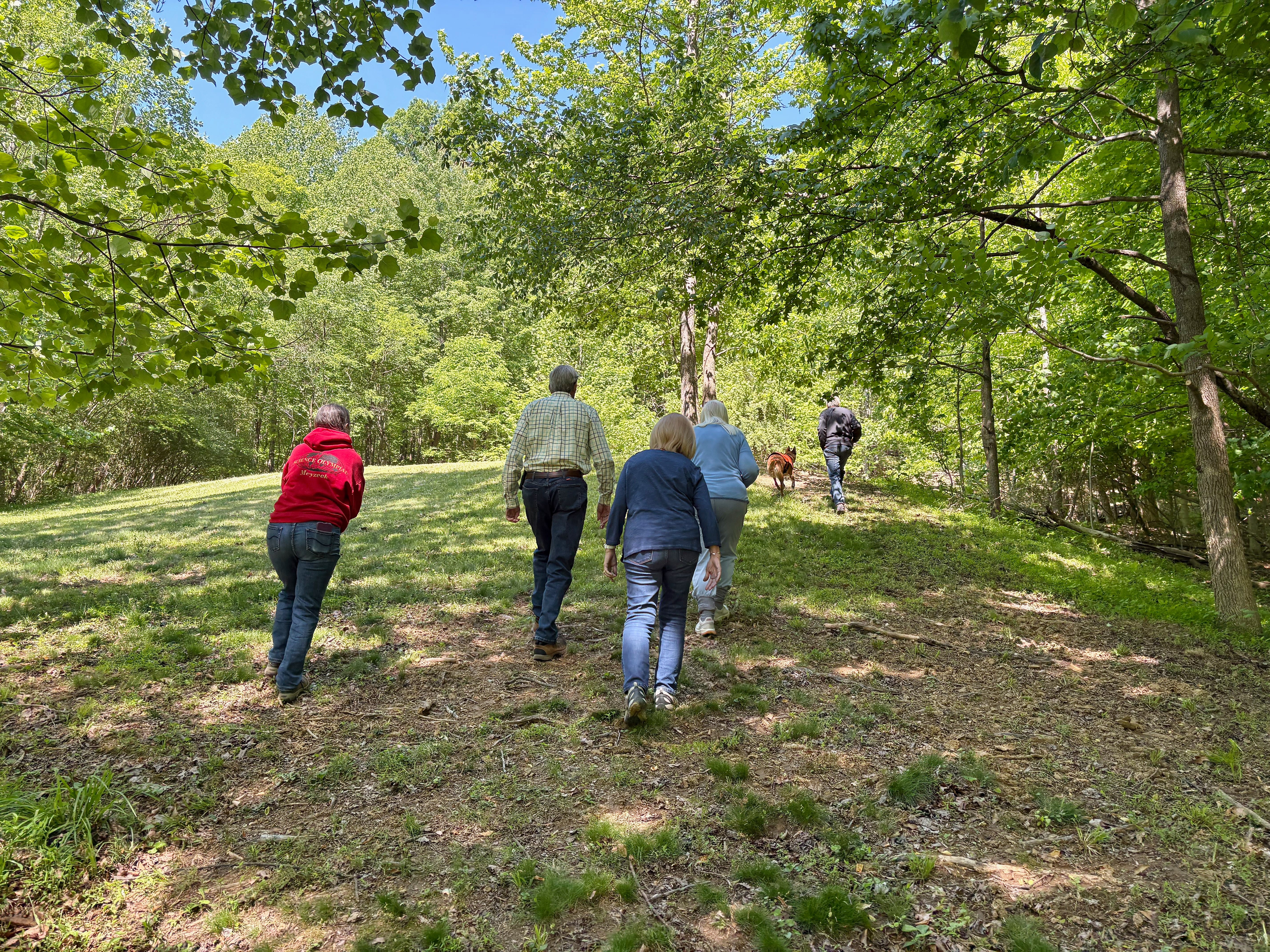
We hiked up there with Art, the Belgian Malinois that Jim and Karen adopted from the dog pound two years ago. Merle was a lover of both nature and animals. As a trainer of German Shepherds, she would have appreciated Art’s participation in Monday’s proceedings.
Remembering Merle
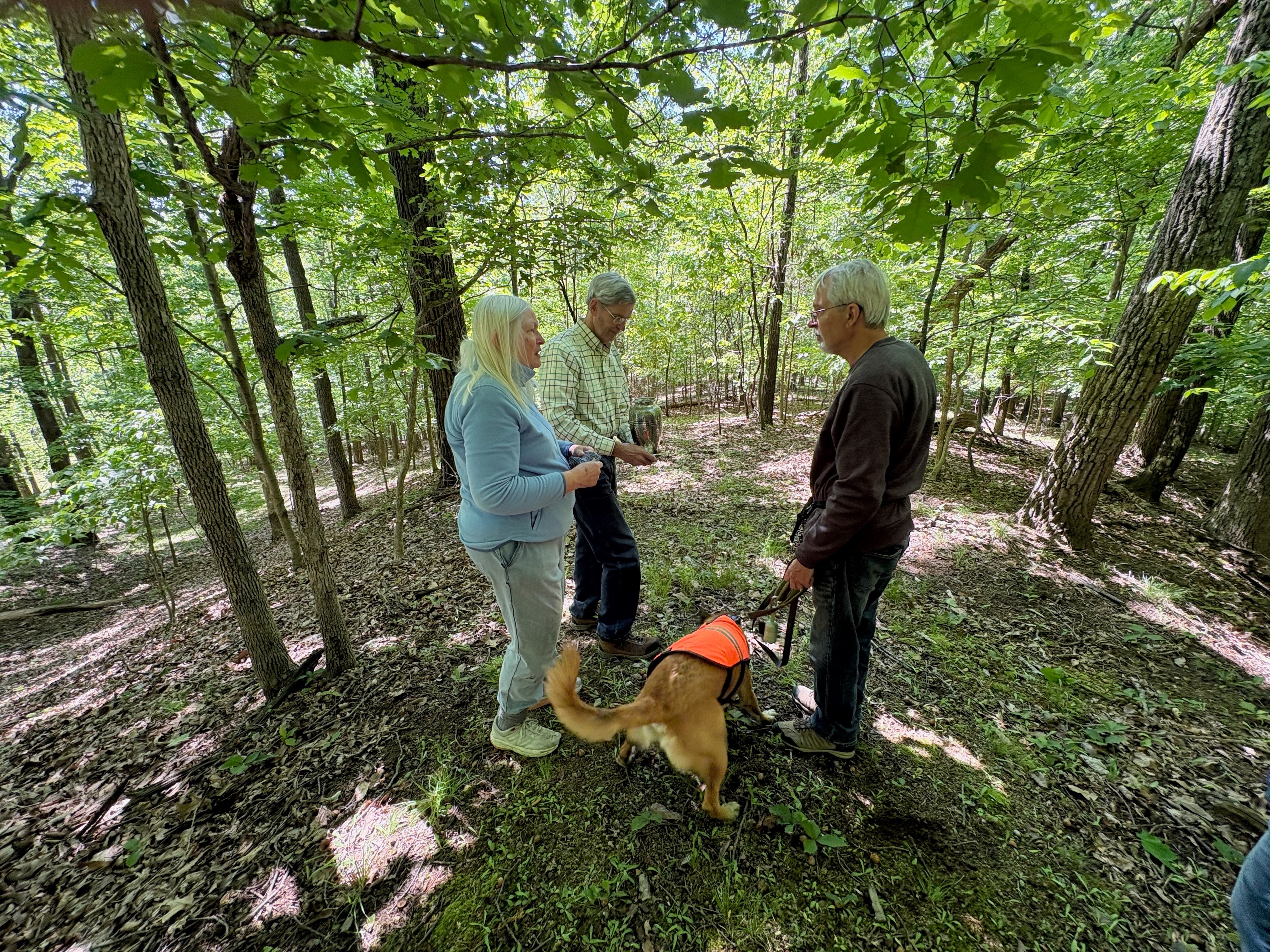
We took a few moments to express our gratitude to and for Merle. From her kids: Gratitude for being such a loving mom and a strong role model. From the in-laws: Gratitude for raising three great kids.
The late morning sunlight flickered through the tops of trees as John opened the urn and began scattering its contents. It seemed a fitting last stop for Merle as a light breeze shared the ashes with the surrounding forest.
When the time comes, Carol and I have been thinking we’d like to end up in the woods, too. Working with our friend, Nancy Kendrick, an end of life doula, we’ve begun exploring various forms of green burial.
My friend, Sara Engram, writes the Mortal Matters newsletter on Substack. She focused last week on what she described as a way to “Become the forest, not just a tree.” Sara writes:
Instead of leaving behind a body to be buried or burned or managed in some way, could we become nourishment for something else, something tall and green and alive?
It’s a beautiful longing. But I’ve been wondering whether that dream is too small.
What if our deeper longing is not really about becoming a tree but finding a way to remain part of the living world?
Merle was 91 when she died on September 3, 2010, so more than a century has now passed since she was born in Denver on May 20, 1919. The newspapers were filled that week with news of an unseasonably late snow storm, along with updates on troops returning to Colorado from World War I.
Ever ahead of her time, Merle was born the day before the House of Representatives voted in favor of Women’s Suffrage by a margin of 304-89.
A Phi Beta Kappa math graduate of Purdue, Merle served as a plant manager for Seagram during World War II. Later, she earned a master's degree in public health from the University of North Carolina.
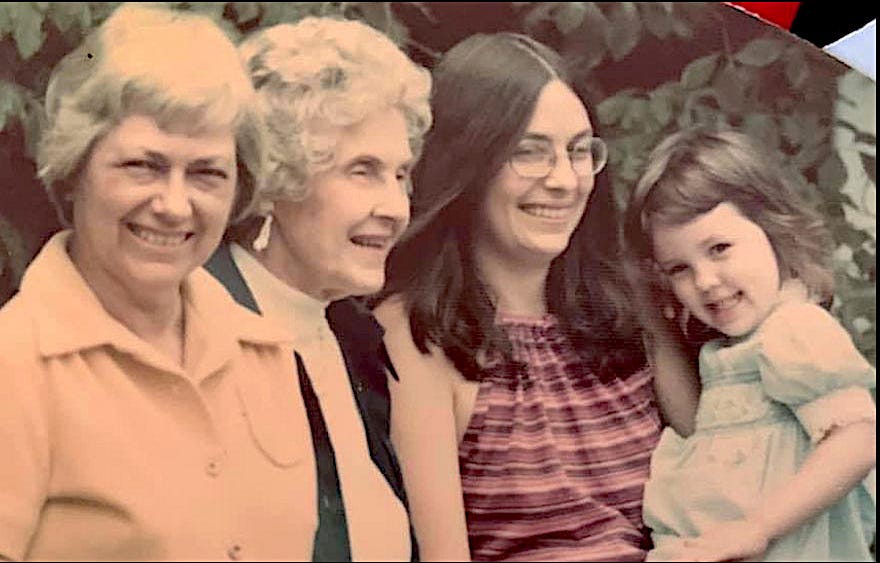
Her marriage to Jack Lichtefeld ended in divorce in 1973. In 1990, she re-connected with a college classmate, Bob Donahue, to prepare a 50th reunion edition of the Purdue Exponent, the newspaper they both worked on back in the day. They married later that year.
Jack died in 1993, Bob in 1992.
Merle would have enjoyed the family gathering prompted by the scattering of her ashes. Our time together included a drive past the family home on Tremont Drive and a cruise through downtown Louisville.
As we passed by the University of Louisville Medical School, Carol’s brother, John, told us: “Jack went there.”
Along with everyone else in the car, I was stunned, unaware of any medical training in their dad’s background.
“Jack went to med school?” I asked John.
“As a cadaver,” John explained, reminding us of Jack’s decision to donate his body to the school.
It was an exchange Merle would have enjoyed.
Thanks, Bill for yet another inspiring story. It urged me to research the differences between palliative care and a death doula; which was a new concept to me. I had no idea that Nancy Kendrick functioned in that role & made me think we might have her offer a presentation to our PCC in the fall.
A great piece, Bill. I love a good cadaver story.